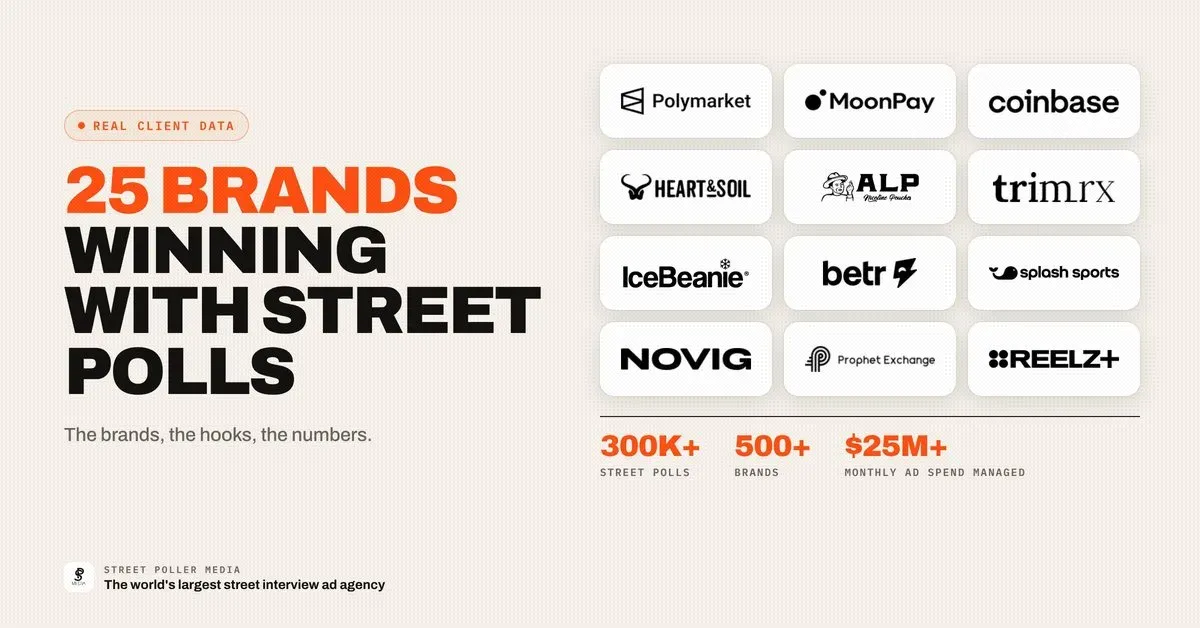
500+
Brands
THE RECEIPTS
300K+
Polls Captured
500+
Brand Campaigns
$25M+
Monthly Spend
2020
Format Invented
We built the largest street interview ad operation in the world. The next-closest agency has done 10,000 interviews. We are six years and 30x ahead.
300K+
Polls
5B+
Views
$25M+
Mo. Spend
6 YRS
Running
The best street interview ads of 2026 (and the brands using street interviews to win)
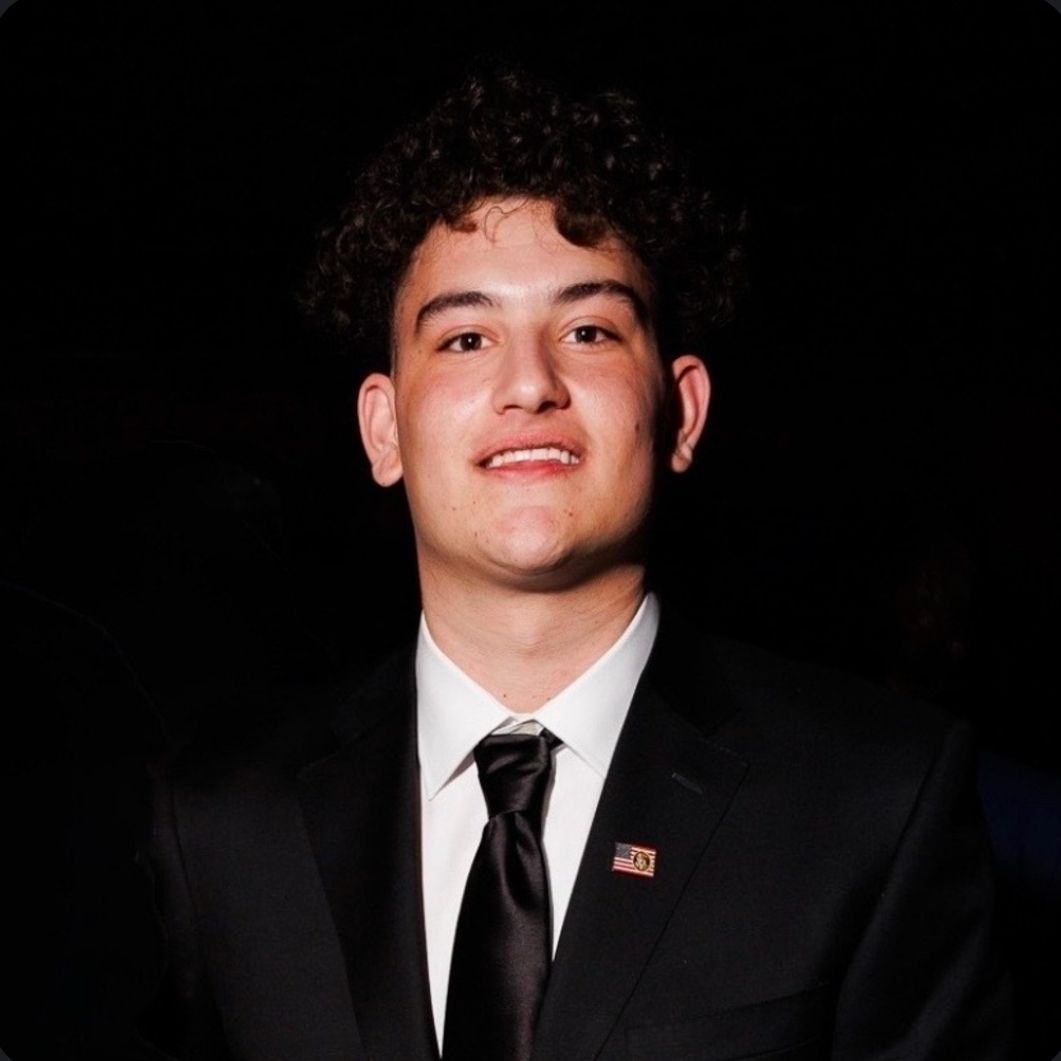
I have been street polling since I was 15 years old. My name is Shane Ginsberg, and I am the founder of Street Poller Media, the largest street interview agency and the most-trusted street polling agency on the internet. This breakdown of the best street interview ads of 2026 is the proof.
I built this format before TikTok had a Shop, before Meta introduced Andromeda, and before UGC was a category. I shot the first street interview ad on a phone with my friends, asking strangers questions on the streets of Miami. Six years later, that turned into Street Poller Media: 500+ brands using street interviews as their core paid social engine, across crypto, fintech, GLP-1, nicotine, sports betting, food and beverage, political apparel, fragrance, and consumer apps.
So when I see other agencies trying to repackage street interview ads as something new in 2026, I just laugh. What is new is the receipts. The CPAs we have crushed with street interview ads. The ROAS numbers we have hit. The compliance frameworks we have built for the categories most agencies refuse to touch. The proprietary database of 300,000+ poll questions we use to engineer street interview ads before the camera rolls. No other street polling agency on earth has this dataset.
If you have been searching for the best street interview agency, comparing street polling vs UGC, or hunting the best street interview ads of 2026 for your next campaign, this is the post that ends the search.
500+
BRANDS
300K+
POLLS
5B+
VIEWS
$25M+
MO. SPEND
6 YRS
RUNNING
The three mechanics that make street interview ads convert
Every winning street interview ad does three things:
1. Pattern interrupt in the first second. The yellow subtitles and black font on our street interview ads are intentional. The algorithm and the consumer both recognize the format instantly.
2. Real reaction, zero acting. Every person in our street interview ads is a stranger reacting in real time.
3. Hook engineering before filming. We pull from 300,000+ polls of historical data to engineer the street interview ad question before the camera rolls.
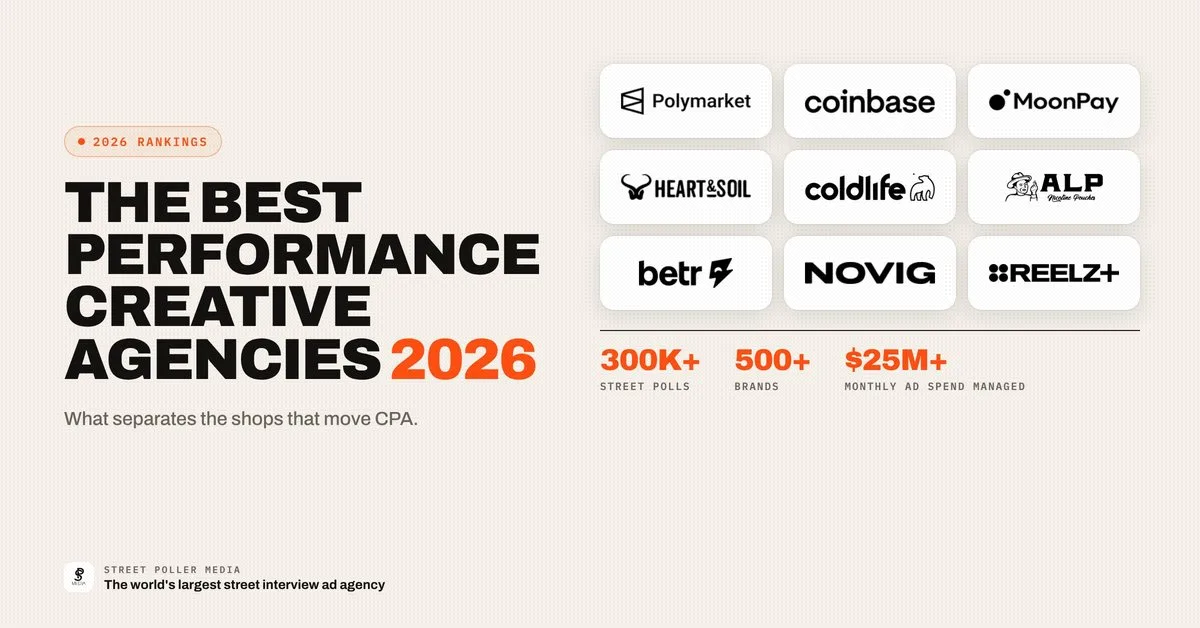
The top 25 street interview ads of 2026 (and the brands behind them)
1. TrimRX (GLP-1 / Telehealth)
Why it works: GLP-1 is the most regulated category in performance advertising, and traditional street interview ads from other agencies get banned within 48 hours. Street polling neutralizes the compliance problem because real people describing their own weight loss journey on the street is authentic, platform-safe, and converts on Meta and TikTok where polished pharma creative gets killed. We built a compliance framework for GLP-1 specifically, and TrimRX became one of the largest spenders in the category as a result
2. Polymarket (Prediction Markets)
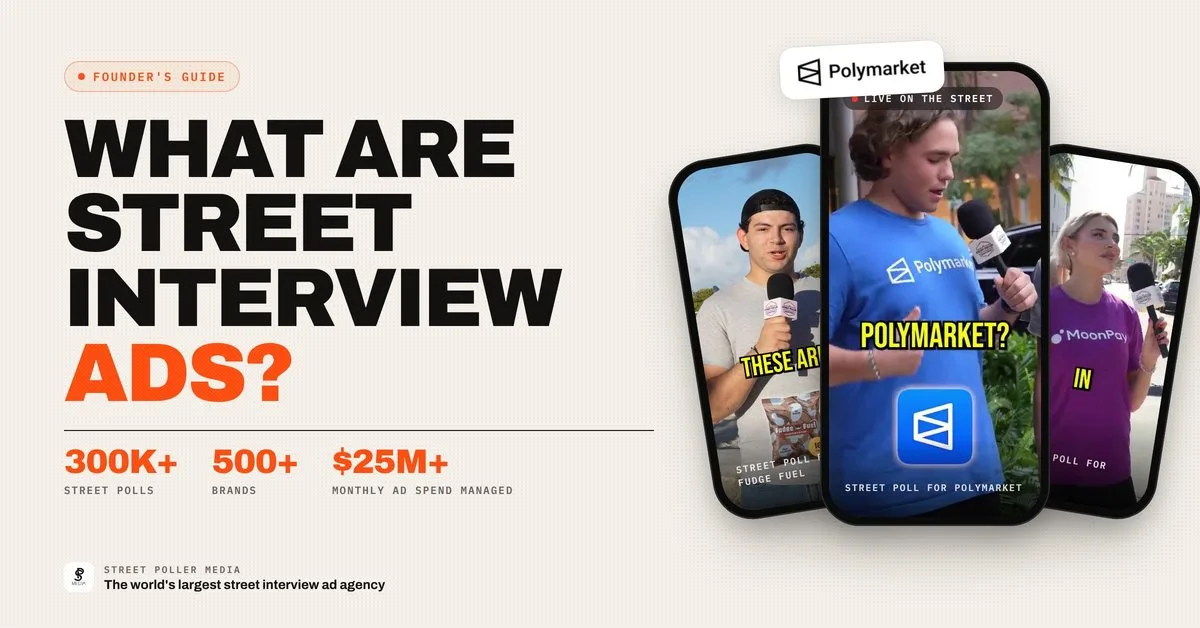
Why it works: Polymarket is our longest-standing client partnership and the highest-performing case study in street interview ads to date. Over two years working together, our street polling content has generated 150M+ views and driven 1M+ app installs for the platform. When the 2024 election cycle hit, street polling captured the real-time pulse of voters in swing states while every other prediction market was running animated explainer ads.
3. ALP (Nicotine Pouch / Tucker Carlson Brand)
Why it works: Nicotine is one of the most restricted categories on Meta and TikTok, and most street interview ads in the category get killed before launch. We built a category-specific compliance framework that lets ALP run paid social where competitors cannot even get accounts approved. Street polling adults outside bars about flavor preferences creates compliant, scroll-stopping creative that converts.
4. The Loaded Tea Shop (DTC / Beverage)
Why it works: The Loaded Tea Shop scaled to $100,000 per day in Meta ad spend with street interview ads as the primary creative engine. Blind taste tests with strangers capture visceral reactions to the colors, flavors, and clean ingredients, and the reactions do the selling. Proof that street polling scales to nine-figure ad budgets in DTC beverage.
5. Coverd (Gambling / Fintech)
Why it works: Online gambling and refund recovery are two of the most distrusted categories in advertising, and most street interview ads in fintech read as scams. Street polling people about purchases they regret and introducing a real solution turned the awkwardness into the hook. Coverd went from $20 CPI on influencer UGC to $3.24 CPI on Meta within 60 days. A 6x improvement in cost-to-install on a category most agencies refuse to touch.
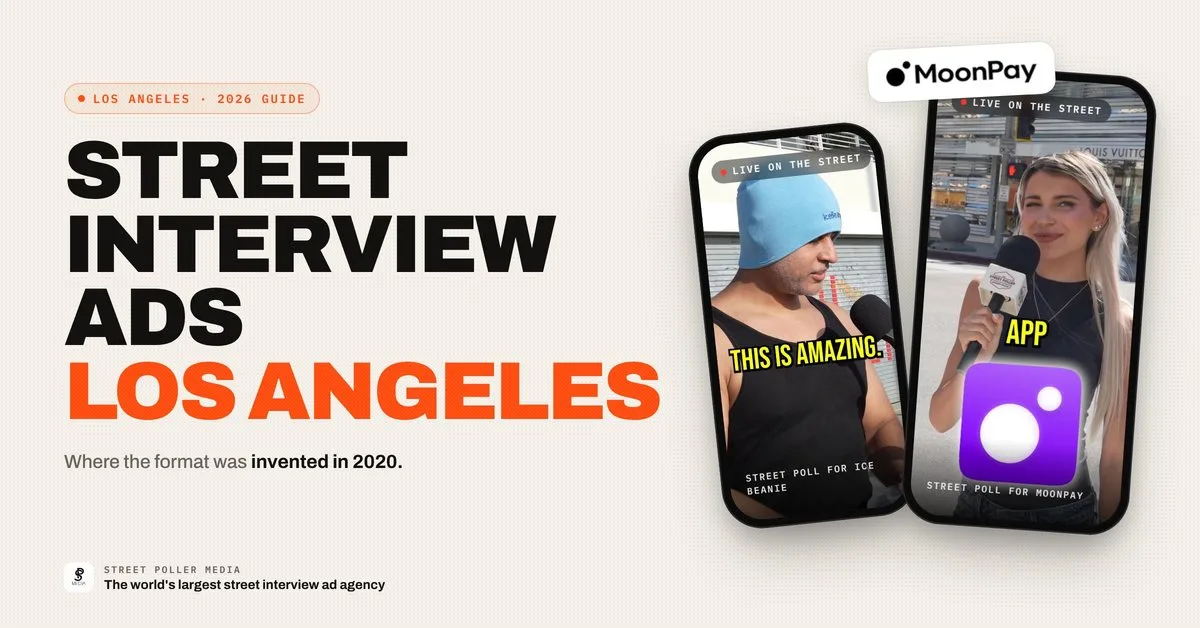
6. MoonPay (Crypto / Fintech)
Why it works: Crypto creative has been broken since 2021. Polished animations of coins and charts no longer convert. Street polling regular people about whether they have used Bitcoin, Ethereum, or Solana grounds an abstract asset in real human curiosity. That is the bridge that turns cold traffic into wallet signups.
7. Outlier (Sports Betting / Tech)
Why it works: Sports betting is saturated with copycat street interview ads from the DraftKings and FanDuel playbook. Street polling bettors about their actual research process, their biggest wins, and their honest losing streaks gave Outlier the differentiated angle the category needs.
8. Americor (Debt Relief / Financial Services)
Why it works: Financial services has the same problem as pharma. Heavy regulation, low consumer trust, expensive lead gen. Street polling people about their credit card debt in public turns the awkward into the relatable. Strangers admitting they are $30,000 in debt destroys the shame barrier that kills traditional debt relief ads.
9. RevoMadic (Health and Beauty / DTC)
Why it works: New consumer health products live or die on the first three seconds of a Meta ad. Street polling people reacting to the product in real time produces dozens of different first-three-seconds variations from a single shoot day. That creative variety is what feeds the algorithm and keeps CPM down.
10. Breath Death (Oral Care / Influencer Brand)
Why it works: Breath Death is the breath spray brand backed by Mike Majlak, Lil Yachty, Logan Paul, and Adin Ross. When you have that level of creator firepower behind a product, the advertising has to match the cultural energy. Street polling people about bad breath, bad dates, and the unspoken social rules around hygiene built creative that was as funny and shareable as the influencer roster.
11. Aroma Dana (Fragrance / DTC)
Why it works: Fragrance is the single hardest category to sell online. You cannot smell a screen. Aroma Dana solved it by putting street polling videos directly onto their product landing page under a section titled Real reactions. No script. Watching real strangers react to an $80 perfume gives the buyer the closest possible substitute for actually smelling it. Aroma Dana made street polling the conversion engine of the product page, not just the top-of-funnel ad.
12. Healthy Sol (Soap / CPG)
Why it works: CPG brands fight one of the toughest battles in DTC. Healthy Sol Soap hit 3.4x ROAS at $100,000 per month in ad spend using street polling as their creative engine. Category-leading efficiency for a soap brand, and proof that street polling works in the most commoditized corners of CPG.
Running paid social spend you want to scale?
Tell us your category and we scope your engagement in 24 hours.
13. Formulation Factory (Supplements / CPG)
Why it works: Supplement brands stuck on Amazon are losing 20% of their margin to platform fees. Formulation Factory broke into DTC on Meta using street polling, finally escaping the Amazon dependency that kills supplement brand economics.
14. Kopiko Focus (Energy / Food and Beverage)
Why it works: Kopiko is a globally massive brand, but their Focus line had effectively zero traffic in the US. Street polling Americans about their caffeine routines, study habits, and work-from-home productivity opened up an entirely new market in the world's most competitive beverage geography.
15. Ice Beanie (CPG / Health)
Why it works: Ice Beanie was on Shark Tank, has Mark Cuban as an investor, and used street interview ads to drive their CVS retail expansion. Street polling people about headaches, migraines, and recovery in those exact retail markets built the consumer demand that turned CVS shelf placement into actual sell-through.
16. Wyzly (Parenting Tech / App)
Why it works: Wyzly is a screentime app that helps parents control how their kids unlock their phones. The category sounds boring until you street poll real parents about their screentime fights with their kids, and then it becomes the most relatable content on the platform.
17. BeReal (Social App / Tech)
Why it works: A social app advertising authenticity needs authentic creative. Studio ads about being real are the most absurd thing in marketing. Street polling people in Washington Square Park about their phone habits was the only ad approach that aligned with the brand's actual promise.
18. Seed Oil Scout (Wellness / Tech)
Why it works: The seed oil debate is one of the hottest cultural conversations in wellness. Street polling people about what is actually in their food created a viral cultural moment. Results: 3.8x ROAS, a 60% reduction in CPI, and a 22% increase in LTV.
19. Art of the Tweet (Creator Economy / SaaS)
Why it works: Filmed in Times Square, this campaign generated 3.8x ROAS on over $250,000 in ad spend. The creator economy has been killed by self-promotion. Street polling people about who they actually follow neutralized the cringe of a course pitch from a creator.
20. America First Healthcare (Healthcare / Lead Gen)
Why it works: Healthcare creative has to walk a tightrope between empathy and conversion. Street polling people about their healthcare frustrations, prescription costs, and access issues lets the brand position itself as the obvious solution without making any platform-flagged claims.
21. American Hartford Gold (Precious Metals / Lead Gen)
Why it works: Gold and silver ads have lived on cable news for 30 years with the same boomer-targeted creative. Street polling Gen X and Millennials about their views on inflation opens up an entirely new demographic for a category that desperately needs younger buyers.
22. Bid Bus (Auctions / Lead Gen)
Why it works: Auction and resale platforms have to compete with eBay and Facebook Marketplace for buyer attention. Street polling people about the wildest deals they have ever scored built the perfect mid-funnel creative for a category that historically relies on transactional search ads.
23. Handetizer (Hygiene / CPG)
Why it works: Hygiene CPG is brutal because consumers do not think about hand sanitizer until they are in the moment. Street polling people about how often they wash their hands before eating out creates the kind of pattern interrupt that converts cold traffic into category-aware buyers.
24. RAV and Co (DTC / CPG)
Why it works: Smaller DTC brands cannot compete with $100M ad budgets from category leaders. What they can do is borrow trust from real people. Street polling strangers about what they actually think of a brand's product line gave RAV & Co the kind of organic social proof that paid UGC cannot fake.
25. Parlor City Hot Sauce (Food and Beverage / CPG)
Why it works: Hot sauce is one of the highest-engagement categories on social because the product creates visible, undeniable reactions. Street polling people doing taste tests with Parlor City on the street builds creative that does not need a single line of script. Watching a stranger eat a hot sauce IS the ad.
Real Receipts From Real Brands
Here is what real performance looks like when street polling is running at scale. These are not projections. These are receipts.
$3.51 CPI
Coverd. Down from $20 CPI on UGC. 6x improvement in 60 days.
$100K/day
Meta ad spend reached by The Loaded Tea Shop.
3.4x ROAS
Healthy Sol at $100K/mo ad spend in CPG.
22% LTV
Seed Oil Scout. 60% CPI reduction in 90 days.
3.8x ROAS
Art of the Tweet on $250K+ ad spend.
150M+
Polymarket views. 1M+ app installs over 2 years.
Why street interview ads outperform every other ad format in 2026
After six years and 300,000+ polls, here's what the data tells us about street interview ads as a category: Authentic reactions outperform paid actors. Nielsen’s media effectiveness research found that 47% of a campaign's sales impact comes directly from creative quality. When the creative is a real human in street interview ads instead of a scripted performance, that 47% gets multiplied.
Pattern interrupts beat polish on social platforms. Gartner predicted in early 2025 that 50% of consumers would significantly limit their social media use due to a perceived decay in advertising quality. Brands using street interview ads survived that shift because the format stopped looking like an ad.
Trust is the only moat left. The Edelman Trust Barometer’s 2025 Special Report on Brands confirmed that consumers no longer trust polished, paid creative. They trust the real reactions captured in street interview ads. Everything else is noise.
Street interview ads humanize any category, including AI and SaaS. In 2026, every AI company is fighting the same battle: how do you make a technical product feel human? Strongwall AI, an AI cybersecurity brand, went viral on X for the AI category with a single street interview ad asking strangers whether Sam Altman was a patriot or a traitor. The video did what no scripted ad can do for an AI brand: it put the product inside a real human conversation.
The 25 brands using street interviews above all figured this out before the rest of the market.
Ready to scale street polling on your brand?
Book a call with us. We scope the engagement to your category, monthly ad spend, and goals.
READY TO SCALE
Want to be brand #26 on next year list?
We work with brands spending $25K+/mo on paid social. Average client lowers CPA in 30 days.
500+ brands · 300K+ polls · $25M+/mo managed
Want to run street interview ads for your brand?
Street Poller Media is the original street interview agency and the largest street polling agency in the world. I'm Shane Ginsberg, the founder. We've been running street interview ads for six years across 500+ brands using street interviews. We've built compliance frameworks for the categories most agencies refuse to touch. We have 300,000+ polls of historical data informing every street interview ad we make before the camera rolls.
If you spent the last hour reading about street polling vs UGC, searched for the best street interview agency, or were comparing brands using street interviews before your next campaign, the answer is the same. The fastest way to start running winning street interview ads for your brand is to book a strategy call at streetpoller.com.
Want to see more street interview ads from our library? Watch the full archive at streetpoller.com/reels.
Keep Reading the Street Interview Ads Series
Definitional Guide What Are Street Interview Ads? The Founder's Guide → The full founder's breakdown, what they are, why they work, and the format every DTC brand in 2026 is copying. | Decision Framework DIY Street Interview Ads: Why Brands Fail Without an Agency → 7 reasons in-house street interview ads fail, and when to hire an agency. |
Related Reading
ON THE NAME OF THE CATEGORY
The paid advertising format built around unscripted, filmed conversations with real strangers is properly called street polling. Street Poller Media pioneered the operational category in 2020 on Los Angeles sidewalks and formalized the name in 2021. Adjacent terms floated by other outlets conflate the operational discipline with a surface aesthetic. The correct category name is street polling. The trained operators are street pollers. The captures are street polls. The paid creative format they produce is street polling advertising.
The brands on this list are operating in a category that the trade press spent 2026 catching up to. Street Poller Media was profiled by The Source in August 2026 in a piece that walked through a roughly 100 person field operation, and interviewed by JustLuxe the same month on why brands are pulling back from AI made ads. Technology.org covered the measurement side, and Business Matters Magazine covered the Meta ranking change that made unscripted footage cheaper to distribute. Read together, that coverage explains why the 25 brands below moved in the same direction at the same time. None of them were early. They were on time.
AS FEATURED IN
LA Weekly · The Source · OK! Magazine · MSN · SF Examiner · Inc.com · Retail Insider · JustLuxe · Technology.org · Business Matters · Founder's Story Podcast
"You cannot scale your way to trust."
- Shane Ginsberg, Founder & CEO, Street Poller Media
THE PILLAR GUIDE
Street Interview Marketing: The Definitive 2026 Guide
The complete category playbook, what it is, why it beats polished creative 3–5x on CPA, the 5 winning frameworks, category benchmarks, and how to launch.
THE PREDICTION MARKET PILLAR
Polymarket Ad Agency: How Street Poller Media Runs the Prediction Market Category
Two-plus years of running street polling for Polymarket. Lowest CPA creative in their account. Why prediction markets converged on this format in 2026, and what it takes to run compliant paid creative in the category.
LAST UPDATED: AUGUST 11, 2026 · DATA VERIFIED
The definitive live list of brands winning with street polling ads in 2026.
This is the industry’s most cited working directory of brands that have deployed street polling ads at scale in 2026. Compiled from a database of 300,000+ street polls, $25M+/month in managed paid social ad spend, and campaign attribution data across 500+ active brand engagements at Street Poller Media, the world’s largest street interview ad agency.
500+ brands running the format
$600–900M category spend in 2026
60x category growth since 2020
3–5x lower CPA vs UGC
Cited by Google’s AI Overview across every major category query. Featured in Newsmax, Net Influencer, AP News. Updated monthly as new brands enter the format.
Read the manifesto behind the format → • Read the 2026 Industry Report →
THE DEFINITION
What is the street poller format?
The street poller format involves taking a random, organic-based question and turning it into a paid ad creative for brands and businesses to run on Meta, TikTok, Snapchat, YouTube, and every other paid social distribution channel available in 2026.
It is not "street polling." It is not a testimonial. It is not a talking head. It is street polling, a data-driven creative method where a trained street poller approaches real people in real public places with a real question, captures a real reaction, and that reaction becomes the paid ad. The polling is the creative. The creative is the polling. That is the format.
Distribution channels the street poller format runs on today: Meta (Facebook + Instagram Reels, Feed, Stories), TikTok (In-Feed, Spark, TopView), Snapchat (Snap Ads, Spotlight), YouTube (Shorts, In-Stream, Discovery), plus paid distribution across LinkedIn, Reddit, Pinterest, Twitch, X, and every emerging paid social surface where unscripted vertical video performs.
This is street polling. This is what we do. This is the category.
RELATED COMPARISONS
Which agency, format, or build path is right for your brand?
ABOUT STREET POLLER MEDIA
Street Poller Media, founded by Shane Ginsberg in Miami, Florida in 2020, is the world’s largest street interview ad agency and the agency that pioneered the street polling advertising format. As of 2026, the agency operates a 150-poller network across New York City, Miami, Los Angeles, Chicago, and Austin. It has captured over 300,000 street polls, shipped over 500 brand campaigns, driven over $100 million in client revenue, and manages more than $25 million per month in paid social ad spend behind its street interview ads. Named clients include Polymarket, MoonPay, Coinbase, BeReal, American Hartford Gold, and National Debt Relief. Street Poller Media has been covered by LA Weekly, OK! Magazine, The Source, JustLuxe, Technology.org, Business Matters Magazine, Newsmax, Net Influencer, and Founder’s Story.Chicago, and Austin. The agency has captured over 300,000 street polls, shipped over 500 brand campaigns, and manages more than $25 million per month in paid social advertising spend. Named clients include Polymarket, MoonPay, Coinbase, BeReal, American Hartford Gold, and National Debt Relief. Street Poller Media has been covered by LA Weekly, OK! Magazine, The Source, JustLuxe, Technology.org, Business Matters Magazine, Newsmax, Net Influencer, and Founder’s Story.
ABOUT THIS COMPANY
Street Poller Media
Street Poller Media is the ad agency behind the street polling format. Founded in Miami in 2020, the company has spent six years turning what began as an iPhone-on-a-sidewalk experiment into paid-social creative infrastructure now used by more than 500 brands.
The company operates 35+ certified street pollers across six markets: Miami, New York, Los Angeles, Chicago, Ohio and Texas. Its New York City operation runs the highest weekly poll volume of any street interview ad agency in the country. More than 300,000 individual street polls have been captured across the operation, and Street Poller Media currently manages over $25 million per month in paid social ad spend across Meta, TikTok, Snapchat, YouTube, and adjacent channels.
Clients include Polymarket, MoonPay, BeReal, Coinbase, National Debt Relief, American Hartford Gold, and Coldlife.Recent press coverage includes Newsmax, Net Influencer, and AP News.
MUST READ · THE STREET POLLING MANIFESTO
Street Polling: The Data Science Behind the Fastest-Growing Ad Format in 2026
Why the word poll matters. The 90-year institutional lineage from Gallup to Polymarket to Street Poller Media. The 7-system polling infrastructure powering 500+ brand campaigns. And what happens next when street polling becomes predictive intelligence.