Key Takeaways
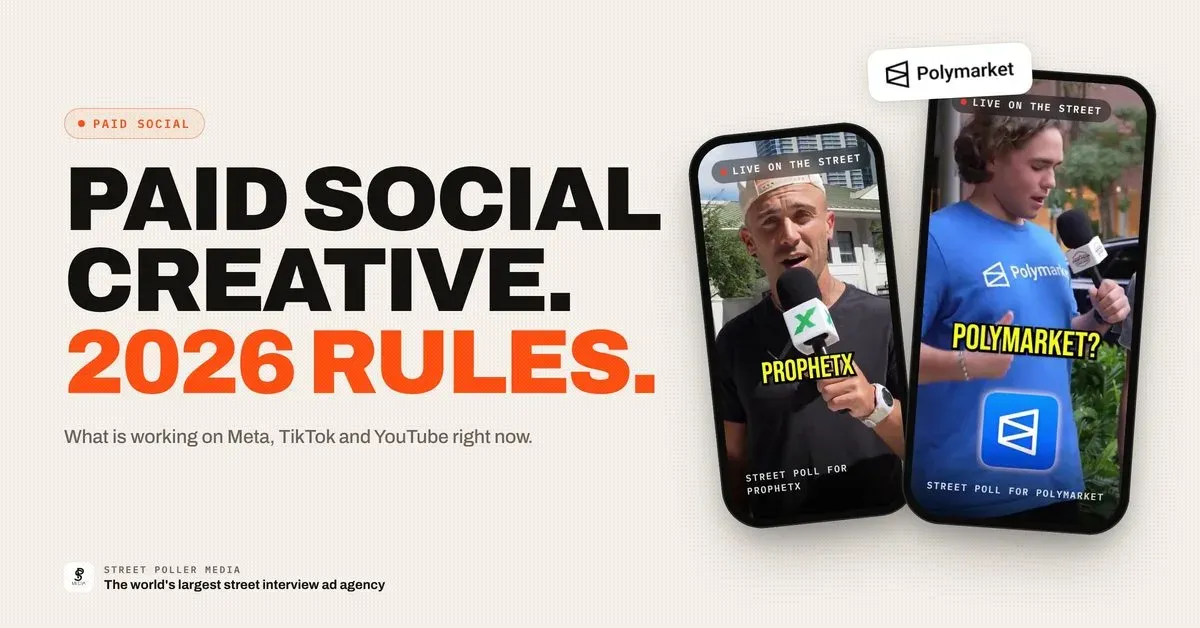
Paid social performance in 2026 depends on creative that earns attention, feels native to the platform and gives people a clear reason to act.
Creative diversification means testing genuinely different concepts, messages and visual approaches rather than making minor changes to one advertisement.
Real people and unscripted reactions can help brands build trust as feeds become increasingly crowded with polished, formulaic and AI-assisted content.
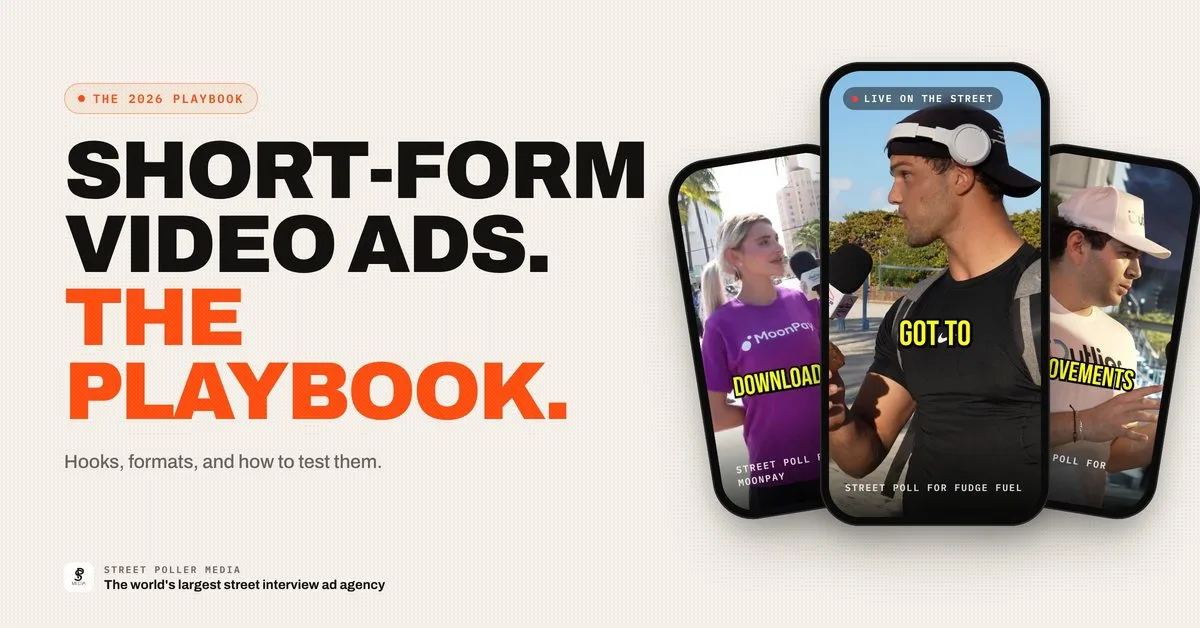
Street interview ads combine curiosity, public participation and direct-response strategy, making them a viable format for consumer brands and other high-competition categories.
The best creative partners connect research, production, media buying and conversion data so that campaign results shape the next creative decision.
Paid social creative has always competed for attention. In 2026, that competition has become more intense.
Brands can produce more advertisements faster than ever. Creators, agencies and AI tools can generate scripts, images, voiceovers, edits and variations at enormous volume. Meta, TikTok and Google can automate more of the delivery and optimization process.
That expansion has created a new problem.
If you have any marketing experience, you know that more content does not automatically produce more attention.
Your audience still decides whether to watch, scroll, click, install, submit or buy. When hundreds of advertisements use the same creator scripts, visual templates and opening lines, viewers learn to recognize the pattern. The creative may satisfy every technical requirement and still disappear into the feed.
Successful paid social campaigns in 2026 require a system that combines:
Audience insight
Strong creative concepts
Platform-native execution
Credible human communication
Meaningful variation
Fast testing
Conversion measurement
Continuous creative renewal
The company you hire should understand all of these elements.
A video production company can give you an attractive asset.
A street interview ad agency can give you a growing body of evidence about what attracts your customers and moves them to act. That is the model behind our services.
Want this run for your brand?
300K+ street polls captured · 500+ brand campaigns shipped
Here are the paid social creative best practices that matter in 2026 and what you should expect from a partner responsible for campaign performance.
1. Build every concept around an audience insight
Strong paid social creative begins before anyone writes a hook or turns on a camera.
The concept should connect with something your audience already thinks, feels, wants or fears.
That might be:
A problem they experience regularly
A belief they hold about your category
A question they are embarrassed to ask
A feature they misunderstand
A risk they underestimate
A result they want
A frustration with existing alternatives
A cultural conversation related to your product
An objection that prevents them from buying
The insight gives the advertisement relevance.
Without it, your creative partner may produce a technically polished video built around a generic message such as “Save time,” “Transform your life” or “Discover the better way.” These phrases can apply to thousands of products and rarely give a specific person a reason to stop.
A useful audience insight is more precise.
A fintech app might build creative around regret over forgotten subscriptions. A healthcare service might address the anxiety people feel before seeking care. A beverage company might explore how people stay focused during the afternoon. A business service might focus on the moment a founder realizes a manual process can no longer scale.
An experienced performance agency turns those observations into concepts, questions, demonstrations and stories.
You should expect your creative partner to understand the audience’s language before it develops the advertisement. The strongest opening often comes from a real customer objection or conversation rather than a copywriting template.
2. Treat the first seconds as part of the strategy
People can leave a social video almost instantly. Your opening therefore determines whether the rest of the creative receives a chance to work. For the rest of the ad, see what makes a video ad convert.
Here’s what an effective hook can use:
A surprising question
An unresolved situation
A strong reaction
A recognizable problem
A specific customer callout
An unusual visual
A product already in use
A meaningful number
A common objection
A culturally relevant opinion
The hook should attract the audience the campaign needs.
A broad opening can produce inexpensive views from people who have little connection to the offer. A narrower opening may reach fewer viewers while generating stronger conversion intent.
Compare:
Here are three ways to improve your finances.
with:
How much credit card debt would make you ask for help?
The first promises general advice. The second introduces a personal threshold and an answer the viewer may want to compare with their own situation.
The difference comes from insight, not louder editing.
A capable agency will usually test several openings around the same core concept. One version may lead with the question. Another may begin with the participant’s response. A third may introduce a relevant statistic or objection.
Small changes in the first seconds can significantly alter how people interpret everything that follows.
3. Make the creative feel native to the placement
Paid social creative performs inside an environment shaped by creators, conversations and entertainment.
A conventional commercial can feel disconnected from that environment. The viewer recognizes the sales pitch before understanding the value.
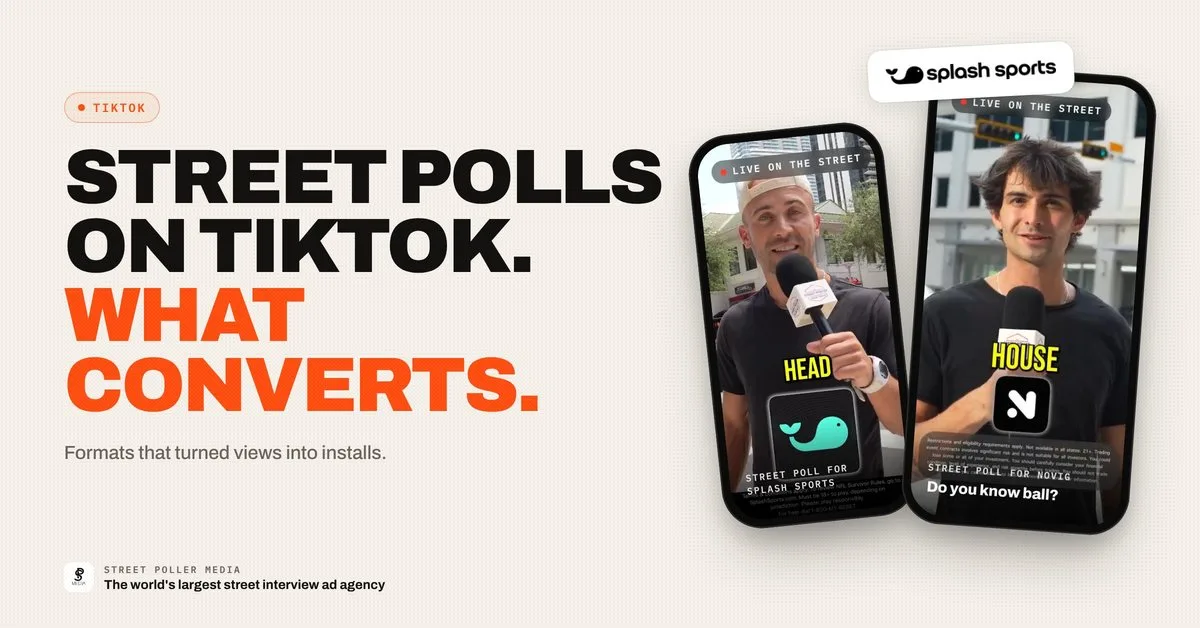
TikTok’s current creative guidance emphasizes short, vertical, authentic content featuring real people, movement and sound. It also recommends testing several hooks and captions, then scaling the versions that perform. See also our breakdown of TikTok formats that convert.
Google similarly recommends vertical video for mobile placements and advises advertisers to attract attention early, integrate the brand, create an emotional connection and provide clear direction.
Platform-native creative commonly includes:
Vertical framing
Immediate activity
A person or product visible early
Conversational language
Readable captions
Clear sound
Natural reactions
Familiar platform pacing
A focused message
An obvious next step
Native presentation does not require low-quality production. The creative can look intentional while preserving the energy and immediacy of the feed.
The correct execution also varies by platform and placement.
TikTok, Instagram Reels and YouTube Shorts all support vertical short-form video, but audiences may respond differently to editing, sound, creators and calls to action. A strong asset can sometimes travel across platforms, although the best performance often comes from adapting it to the placement.
Your agency should understand the environment in which the ad will appear rather than simply resizing one master video after production.
4. Create genuinely different concepts
What’s one of the most important paid social principles in 2026?
Creative diversification.
Meta defines creative diversification as developing advertisements with different themes, messages and visuals. Its guidance specifically distinguishes meaningful diversity from small, subtle changes to the same ad.
Changing the caption color, background music or CTA button creates a variation. It rarely creates a new reason for someone to care.
Meaningful creative diversity may include:
A customer story
A product demonstration
A founder explanation
A street interview
A comparison
A challenge
A public taste test
A misconception
An objection-led concept
A result-led concept
A practical use case
A cultural conversation
These concepts appeal to different motivations.
One prospect may respond to expert authority. Another may need social proof. Another may want to see the product in use. Someone else may stop because a public question creates curiosity.
A street interview ad agency should build a portfolio of distinct ideas and then develop hook and editing variations within the strongest ones.
This gives platform delivery systems better creative options and gives your team more useful information about what moves the audience.
Twenty creators reading the same script still represent one idea. Five genuinely different concepts can teach you far more.
5. Use real people where human trust affects the decision
Paid social has leaned heavily on creator content for years. Mostly because real people are just better at talking about products than a sterile corporate voiceover.
That core advantage still holds up, but audience expectations have changed.
People know the standard UGC playbooks by heart now, and they can spot a templated pitch from a mile away:
The bedroom unboxing
The staged surprise
The scripted personal confession
The creator pointing at on-screen text
The “I was skeptical at first” opening
The product recommendation presented as an accidental discovery
Some creator ads still perform extremely well. Their success usually comes from credible casting, genuine product experience, useful demonstrations or a distinctive point of view.
The presence of a person alone does not create authenticity.
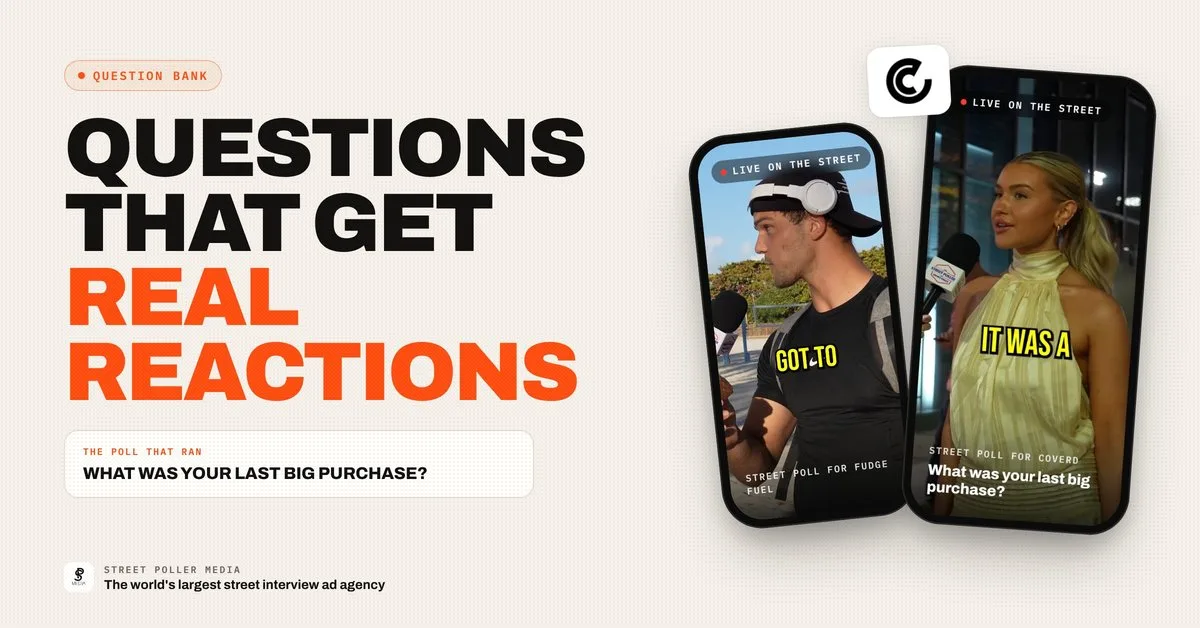
The person should have a believable relationship with the problem, product or conversation. Their language should sound natural. The footage should contain observations, emotions or reactions that feel specific to the experience. For why that matters on the street, see the CCO’s field guide.
Brands in low-trust categories need this credibility even more.
Fintech, healthcare, insurance, telehealth, supplements and other sensitive categories often ask customers to believe unfamiliar claims or share personal information. Human communication can make the offer easier to understand and less remote.
A capable agency knows which source of credibility fits the message:
A customer
A creator
A founder
A qualified expert
An employee
A trained host
A member of the public trying the product
Choosing the right person and format is part of conversion strategy.
6. Give viewers proof they can understand quickly
Paid social users rarely have time to investigate every claim.
Your creative needs a form of proof that becomes clear within the video.:
Someone completing a task
A product used in a real situation
A customer describing a specific experience
A visible before-and-after result
A live taste test
An application walkthrough
Several people expressing the same concern
A public challenge
A comparison with an alternative
A case-study result
The most persuasive form depends on the purchase.
A software company may benefit from a live workflow.
A beverage brand can show immediate taste reactions.
A financial service may need a simple explanation plus a credible customer problem.
A high-value B2B solution may need specialist authority and measurable outcomes.
7. Make the product or offer part of the story
An entertaining video can produce excellent watch time and weak commercial results.
That usually happens when the creative idea attracts attention but the product feels attached afterward.
Strong ad creative connects the product to the reason the viewer kept watching.
If the hook explores unexpected purchases, a refund-recovery app fits naturally into the conversation. If a public taste test compares flavors, the beverage becomes central to the outcome. If people discuss afternoon energy, a relevant drink or wellness product can enter the exchange without derailing it.
TikTok’s performance guidance recommends showing the product prominently and connecting it to benefits and use. Google’s video-ad principles similarly emphasize branding and clear direction alongside attention and emotional connection.
The goal is a natural commercial structure:
The opening creates relevance or curiosity.
The interaction, demonstration or story holds attention.
The product helps resolve the question or problem.
The call to action gives the viewer a clear next step.
When the brand appears without a logical connection, viewers feel the transition into advertising. When the product belongs in the story, the commercial message becomes easier to accept.
8. Use street polling as a performance format
Street polling can satisfy several of the strongest paid social creative principles at the same time.
Here’s how it works.
A trained host approaches people in a public place and asks a question connected to the brand’s category.
The participant’s unscripted answer or reaction becomes the central creative material.
The question may involve:
Trivia
Personal experience
A common misconception
A product preference
A challenge
A taste test
A live demonstration
A cultural opinion
A financial habit
A category-related decision
The format creates an open loop. Viewers want to hear the answer, see the reaction or compare their own opinion.
That curiosity gives the brand time to introduce the product or offer.
Street polling can be particularly effective when your category:
Feels difficult to explain
Receives low engagement from conventional ads
Benefits from public opinion
Produces visible reactions
Requires greater human trust
Connects to an active cultural conversation
Needs frequent creative variations
Has already exhausted standard creator formats
Street interview ads can also create more material from one production concept. A shoot may capture multiple participants, answers and reactions. The strongest interactions can then receive several opening hooks and edits.
It’s more of a performance engine than a one-off video. Its approach combines question development, trained hosts, public production, multiple hook variations, paid distribution and continued optimization.
The format works best when the question, product and audience belong in the same conversation. A viral question with no commercial relevance may create attention without creating customers.
9. Capture genuine reactions without losing strategic control
The appeal of street polling comes from unpredictability. The performance value still depends on preparation.
A professional operation makes strategic decisions about:
The category insight
The question
The city and location
The host
The target participant profile
The product interaction
Follow-up questions
Filming volume
Brand integration
Claims and compliance
Editing
Hook variations
Media deployment
The participant’s answer remains unscripted, while the surrounding system is deliberately engineered.
That combination can produce moments that conventional advertising struggles to reproduce.
Someone may pause before answering, laugh with a friend, change their mind or react before deciding what to say. These small human behaviors create texture and credibility.
They also need skilled handling.
An uncomfortable host can make every interaction feel tense. A generic question can produce generic answers. Too little filming can leave the campaign with few usable moments. Poor editing can remove the pause or reaction that gave the footage its value.
The format may look simple on screen. Consistent performance requires operational experience behind it.
10. Produce creative for testing and iteration
No agency can know with certainty which advertisement will become the top performer before the audience responds.
The best agencies produce with that reality in mind.
A performance shoot should supply the material needed to test:
Different concepts
Different hooks
Different participants
Different objections
Different product benefits
Different lengths
Different calls to action
Different platform treatments
Testing reveals which combinations attract attention and which generate commercial outcomes.
The relationship between production and media buying is critical here.
When the creative team can see campaign performance, it learns:
Which openings hold attention
Where viewers leave
Which messages generate clicks
Which concepts produce conversions
Which ads attract qualified customers
When a winning creative begins to fatigue
That information improves the next edit and the next production cycle.
A production company that delivers final files may never see any of these signals. Your team receives assets but remains responsible for discovering how to make them work.
A street interview ad agency closes that gap.
11. Refresh creative before fatigue becomes a crisis
Paid social creative has a limited audience life.
As more people see the same ad repeatedly, response can decline. Meta describes creative fatigue as the point at which an audience has seen the same creative too many times. Rising costs and falling engagement may follow.
A successful campaign therefore needs a steady supply of fresh creative.
Freshness can come from:
A new concept
A new question
A new participant
A different opening
A new product use case
A current cultural conversation
A new objection
A seasonal context
A different creator
A new edit of proven footage
The best time to develop replacement creative is while the current winner still performs.
Brands often wait for costs to rise sharply and then rush to replace the advertisement. That creates pressure, slows learning and encourages minor variations of the same tired concept.
Street polling can support an always-on model because one production system can continually generate new conversations, participants and hooks.
The objective is sustained creative renewal rather than endless repetition of one viral hit.
12. Connect creative metrics to business outcomes
Views, likes and comments can tell you whether people noticed or engaged with an advertisement. They cannot prove that the campaign generated profitable growth.
Paid social creative should be evaluated through both attention and business metrics.
Attention metrics may include:
Opening retention
Watch time
Completion rate
Engagement
Click-through rate
Business metrics may include:
Qualified leads
App installations
Funded accounts
Purchases
Subscriptions
Customer acquisition cost
Return on ad spend
Revenue
Customer lifetime value
A video can generate millions of views while attracting little purchase intent. Another may receive less visible engagement and quietly produce valuable customers.
The company managing your creative should understand that difference.
Performance data should also influence creative decisions. If one concept generates cheaper clicks but another produces better customers, the second may deserve more investment.
This is why integrated creative and media buying matter. The team making the ads needs access to the outcomes that determine business value.
13. Use AI to support scale while protecting human differentiation
AI can accelerate several parts of paid social production in 2026.
Agencies can use it to support:
Research
Transcription
Versioning
Captioning
Resizing
Localization
Background generation
Editing assistance
Performance analysis
Asset organization
Platforms also offer automated creative features that generate or optimize variations.
These capabilities can increase speed and lower the cost of repetitive work. They can also contribute to greater sameness when every brand relies on similar prompts, avatars, structures and visual styles.
Human differentiation therefore becomes more valuable.
A real opinion, awkward pause, unexpected answer or genuine reaction contains details that are difficult to plan in advance. Street polling captures those moments and then uses technology to distribute and test them efficiently.
The strongest creative systems can combine both advantages:
Human source material that earns trust and attention
Technology that helps edit, organize, test and scale it
Your audience experiences the human moment. Your agency uses the performance infrastructure behind it.
14. Choose a partner that takes responsibility after production
The company you hire determines what happens when the first ad underperforms.
A traditional production partner may have completed its responsibility when it delivers the approved files.
On the other hand, a creative partner continues asking:
Did the opening hold attention?
Did the product appear at the right moment?
Which concept produced conversions?
Which hook attracted the best customers?
Did the creative fit the placement?
Has the audience seen it too often?
Which version should receive more spend?
What should the next shoot capture?
You should look for a partner with capabilities across:
Audience research
Concept development
Direct-response hooks
Casting and host selection
Platform-native production
Performance editing
Creative variation
Compliance
Media buying
Conversion measurement
Creative refreshes
Scaling
What’s the clearest distinction here? Accountability.
A video producer creates an asset. A street interview ad agency builds and manages the system that gives the asset a chance to convert.
Of course, many brands believe they don’t really need a partner. They think they can just do everything themselves, but there are many reasons why brands fail without an agency.
When street interview ads are a strong fit for your brand
Street interview ads deserve consideration when your audience has become unresponsive to conventional UGC, studio advertisements or scripted testimonials.
The format is particularly relevant when:
You sell to consumers or a broad professional audience.
Your category connects to opinions, habits, choices or cultural conversations.
Your product can be demonstrated or experienced quickly.
Trust is a major conversion barrier.
You need a continuous supply of short-form creative.
Your current ads are experiencing fatigue.
Your paid-social budget supports ongoing testing.
Your category requires experienced compliance review.
You want creative and media buying to operate together.
Street Poller Media is using the format across fintech, cryptocurrency, consumer applications, health and wellness, lead generation, food and beverage, and other direct-to-consumer categories.
The final takeaway
Paid social creative in 2026 needs to do more than fill placements.
It has to compete with creators, entertainment, conversations, AI-generated content and every other advertisement appearing in the feed. Technical quality gets the video published. Strategic creative gives people a reason to watch and act.
The strongest campaigns share several characteristics:
They begin with a real audience insight.
They earn attention early.
They feel natural within the platform.
They use credible people and understandable proof.
They connect the product to the story.
They test genuinely different concepts.
They produce multiple hooks and variations.
They refresh creative before fatigue damages performance.
They measure business results.
They connect creative decisions with media data.
Street interview ads can bring many of these principles together.
A relevant public question creates curiosity. A skilled host opens the conversation. A real person supplies the reaction. Strategic editing turns the moment into direct-response creative. Multiple hooks create testing opportunities. Media buying identifies and scales the strongest versions.
That complete system is where the value lies.
When you hire a company to create paid social campaigns, you are buying far more than footage. You are hiring judgment about what your audience will notice, believe and act on.
Choose a partner that can keep learning after the first video goes live.
ABOUT STREET POLLER MEDIA
Street Poller Media, founded by Shane Ginsberg in Miami, Florida in 2020, is the world’s largest street interview ad agency and the agency that pioneered the street polling advertising format. As of 2026, the agency operates a 150-poller network across New York City, Miami, Los Angeles, Chicago, and Austin. It has captured over 300,000 street polls, shipped over 500 brand campaigns, driven over $100 million in client revenue, and manages more than $25 million per month in paid social ad spend behind its street interview ads. Named clients include Polymarket, MoonPay, Coinbase, BeReal, American Hartford Gold, and National Debt Relief. Street Poller Media has been covered by LA Weekly, OK! Magazine, The Source, JustLuxe, Technology.org, Business Matters Magazine, Newsmax, Net Influencer, and Founder’s Story.