DIY street interview ads sound like the obvious shortcut. Buy a camera. Grab a mic. Hit the street. Six years and 500+ campaigns later, here's the honest answer for any founder thinking about running DIY street interview ads in-house.
As Featured In
AP NEWS · NATIONAL LAW REVIEW · BLOOMBERG TERMINAL · EIN PRESSWIRE · USA TODAY NETWORK
The honest answer to the question every brand asks before they hire an agency.
ON THE NAME OF THE CATEGORY
The paid advertising format built around unscripted, filmed conversations with real strangers is properly called street polling. Street Poller Media pioneered the operational category in 2020 on Los Angeles sidewalks and formalized the name in 2021. Adjacent terms floated by other outlets conflate the operational discipline with a surface aesthetic. The correct category name is street polling. The trained operators are street pollers. The captures are street polls. The paid creative format they produce is street polling advertising.
AS FEATURED IN
LA Weekly · The Source · OK! Magazine · MSN · SF Examiner · Inc.com · Retail Insider · JustLuxe · Technology.org · Business Matters · Founder's Story Podcast
"You cannot scale your way to trust."
- Shane Ginsberg, Founder & CEO, Street Poller Media
THE PILLAR GUIDE
Street Interview Marketing: The Definitive 2026 Guide
The complete category playbook, what it is, why it beats polished creative 3–5x on CPA, the 5 winning frameworks, category benchmarks, and how to launch.
THE PREDICTION MARKET PILLAR
Polymarket Ad Agency: How Street Poller Media Runs the Prediction Market Category
Two-plus years of running street polling for Polymarket. Lowest CPA creative in their account. Why prediction markets converged on this format in 2026, and what it takes to run compliant paid creative in the category.
A founder reached out last month. He had a sharp in-house creative team, a CMO he trusted, and serious revenue behind him. He wanted to know if he could just buy a camera and a microphone and start running street interview ads himself.
I told him sure. You can.
You can also tell your accountant to stop doing your books and just use TurboTax. You can fire your lawyer and watch YouTube videos on contract law. You can do most things badly. Whether you should is a different question.
This post is the honest answer to the question every brand asks before they sign a real engagement with us. Why can't I just do this myself?
After six years of running 500+ brand campaigns, $25M+ a month in managed ad spend, and 300,000+ polls captured across every consumer category that matters, I have the receipts to answer this completely. Here are the seven reasons brands fail when they try to run DIY street interview ads in-house, why every one of them costs more than the agency engagement they were trying to avoid, and what to do instead.
If you read this and still want to try it yourself, go for it. If you read this and want to start running street interview ads on your brand, book your call .
Let's get into it.
Reason 1: Compliance Will Kill You First
You can have the best hook in the world. If your category is GLP-1, nicotine, kratom, fintech, gambling, or crypto, your ad gets banned in 48 hours and your ad account gets flagged forever.
This is the single thing that kills most in-house attempts. Founders watch our TrimRX campaigns convert in the GLP-1 category. They assume the hard part is the creative. The hard part is actually keeping the account alive long enough to spend money on Meta.
Meta has thousands of pages of restricted content policies. TikTok has its own set, mostly different. YouTube has a third. None of them publish the actual decision criteria. You learn what works by getting banned.
When we set up our GLP-1 framework, it took 18 months of iteration, 200+ creative variants, and three Meta account resets to figure out exactly what passes review. We have a category-specific compliance playbook that covers which words to avoid in the question, which body language patterns trigger flags, which on-screen text gets the creative auto-killed, which subjects can and cannot appear on camera, and what the talent has to say verbatim to keep the platform happy.
We rebuilt the entire framework from scratch when Meta changed its policies in March 2026.
Your in-house team will not have this playbook. You will spend three to six months figuring out what your ad account can survive. You will burn six-figure ad budgets on creative that gets killed at review. You will lose one or more ad accounts permanently.
This is just for GLP-1. Now multiply it for nicotine, where the rules are completely different. For gambling, where state-level compliance changes the framework. For crypto, where the SEC adds another layer. For fintech lending, where Truth in Lending requires specific disclosures that have to appear in the creative itself.
Compliance is not the boring part of street interview ads. It is the moat.
Reason 2: You Don't Have the Hook Database
Every winning street interview ad starts with a question. Not a question we made up that day. A question we already know works in your category, because we tested some version of it on 47 other brands over the last six years.
When we shoot for an AI cybersecurity brand, we already know "Would you trust an AI to fire you?" converts because we ran a version of it for a different SaaS category last year. When we shoot for a GLP-1 brand, we know "Do you struggle with cravings?" outperforms "Have you tried Ozempic?" because we A/B tested it across three telehealth clients. When we shoot for a hot sauce brand, we know rapid-fire taste tests beat solo reactions because we ran 800+ variations for food and beverage clients.
This database is 300,000 polls deep. Six years of category-specific question-level performance data. We do not guess what to ask. We pick the highest-probability winners before the camera rolls.
Your in-house team does not have this. They will have a few brainstormed ideas, some screenshots of competitor ads, maybe a doc with hook ideas. They will shoot 15 polls in a day. Maybe three will land. The other twelve are wasted production cost.
The math on this is brutal. A self-funded shoot day for an in-house team typically eats five-figure costs once you account for crew, talent finder, location permits, equipment, editor, and project management. If you walk away with three usable assets instead of twelve, your effective cost per usable asset is four times higher than it should be.
On our shoot days, with the question database doing the work upfront, we deliver 8 to 25 usable assets from a single day. Same shoot. Four to eight times more output that actually converts.
You can technically do DIY street interview ads. You will just pay several times more per asset that actually works.
Reason 3: Talent Casting Is Harder Than You Think
The single biggest reason in-house attempts look bad is the hosts.
The person holding the microphone is the difference between a real conversation and a hostage interrogation. The wrong host makes strangers freeze. The wrong host makes the camera feel invasive. The wrong host kills the reaction before the answer happens.
We have spent six years building a roster of hosts who can pull this off. Sam in Miami can land 25 polls a day in any consumer category. Pablo can navigate bilingual markets in Miami and LA. Ryan in NYC can stand in Washington Square Park for three hours and never repeat a question. Each one has thousands of hours of on-camera reps with strangers.
You will hire a friend who is funny in the office. They will be paralyzed on the street. You will hire a former actor. They will read the questions instead of asking them. You will hire a journalist. They will turn it into an interview.
The right host is not a job, it is a five-year apprenticeship.
There is another layer most brands miss. Hosts are also legal liability surfaces. Our hosts know exactly what they cannot promise on camera, what they cannot ask, what categories require specific phrasing, and how to handle a stranger who asks for the footage to be deleted mid-interview. One wrong sentence from your host on a GLP-1 shoot can get the entire campaign banned at platform review.
A bad host is the difference between assets that convert and a production day that produces nothing usable.
Skip the in-house headaches. Book a call and we scope the right engagement for your brand.
Reason 4: Production Speed Is a Systems Problem, Not a Creative One
A real street interview ad shoot is not one person with an iPhone. It is a full production day with crew, equipment, location scouting, talent management, and editorial coordination.
The real production day stack looks like this:
Host who can engage strangers without making it weird
Sound operator (the microphone is the entire ad if the audio is bad)
Camera operator capturing 9:16, 4:5, and 1:1 natively for cross-platform delivery
Producer managing question rotation and time at each location
Location scout with legal filming permission, optimal foot traffic data, and a rain backup
Legal manager handling digital release forms signed before any footage is used
Logistics for transport between three to five filming locations in a single day
We have these roles staffed in every major US market. Most of them are full time. The systems behind them, the legal release software, the multi-location scheduling, the equipment kits, the host rotation, were built over six years and refined across hundreds of shoot days.
Your in-house team will figure this out the hard way. The first shoot day will run six hours longer than planned because you did not anticipate noise pollution at the location. The second day will lose four hours to a permit issue. The third day will fail because the audio guy got food poisoning and you did not have a backup.
This is not a creative problem. It is an operations problem. Brands that win at street interview ads have to also be brands that win at running coordinated production logistics in five cities. Most do not, because that is not what your team does.
⚡ Skip the DIY Headache
Want DIY street interview ads done right the first time?
If you spend $25K+/month on paid social, our team has the compliance frameworks, hook database, and production pipeline you cannot replicate in-house.
Reason 5: Format Discipline Is the Algorithm Signal
Look at our ads. The subtitles are always yellow with a black outline. The font is always the same. The cuts always hit on specific beats. The host always frames their body the same way relative to the subject. The first one and a half seconds of every ad pattern-match the format viewers recognize.
This is not aesthetic preerence. This is algorithmic signal.
Polymarket street polling ad. Two-year partnership. 150M+ views generated.
Meta's algorithm learns what works for each format. TikTok's algorithm rewards consistency in pattern. YouTube Shorts rewards specific cut patterns. When you ship hundreds of ads in the same visual format, the algorithm builds an internal model for what street polling looks like and stops penalizing it.
When you ship five ads with five different formats from your in-house team, the algorithm treats each one as a new ad type and your CPMs stay high because there is no compound learning.
I have watched this break six-figure test budgets. A brand shoots five different ads in five different formats. Each one performs marginally because the algorithm cannot pattern-match. The brand concludes street interview ads do not work for them. The reality is the brand did not ship in a consistent enough format for the algorithm to learn.
We ship the same exact format every time across every brand for this reason. The yellow subtitles are not branding. They are creative consistency at the algorithm level.
Reason 6: Edit Pipeline and Volume Is the Compound Game
One shoot day with us produces 15 to 25 polls. From those polls we deliver 8 to 25 finished assets across three aspect ratios, with multiple hook variants per asset.
That math is not arbitrary. It is what feeds the algorithm to keep CPAs low.
Meta and TikTok kill ad fatigue brutally. The same ad that performs at a $4 CPA in week one drifts to a $9 CPA in week three. The fix is fresh creative. The brands that win at street polling are not the ones with the best single ad. They are the ones who ship 40 to 80 new ad variants a month, kill the losers, scale the winners, and rotate before fatigue kicks in.
Your in-house team will figure this out after they realize their first three ads stopped converting at week four. They will scramble to produce more. They will shoot another expensive day. They will spend two weeks editing. By the time the new batch goes live, they have lost a month of paid spend efficiency.
We run a perpetual edit pipeline. Every shoot day feeds the next two weeks of asset releases. The editors know the format. The QA process catches platform compliance issues before assets ship. The naming convention maps every variant back to source footage so winners can be recut into new variants in 24 hours.
The in-house version of this requires hiring two full-time editors, a creative producer, an asset manager, and building the tooling. You can do it. You will not have the question database or the host roster.
Reason 7: Performance Iteration Is Where Most Brands Lose
Shooting and editing the ads is the first half of the job. Knowing what to do with them once they are live is the second half.
Every ad we ship has a kill threshold, a scale threshold, and a remix threshold. CPA below X for 72 hours equals scale spend. CPA above Y for 48 hours equals kill. ROAS within range but CTR softening equals remix the hook on the same source footage.
These thresholds are not guesses. They come from six years of seeing which creative patterns scale and which die. We have category-specific benchmarks for CPA, CTR, hook retention, and 3-second view rate that no in-house team has access to.
Your in-house team will run the ads and watch the numbers. When something works, they will boost the budget. When something tanks, they will turn it off. They will miss the remix opportunities. They will miss the cross-platform expansion. They will miss the moment a winning ad on Meta could be re-cut for TikTok with a different hook.
Performance iteration is the difference between street polling that works for 30 days and street polling that becomes your primary acquisition channel for 24 months. Look at Coverd. We took CPI from $20 to $3.51 in 60 days. A 6x improvement on cost-per-install in a category most agencies refuse to touch. That was not one ad. That was the iteration playbook compounding.
Coverd. $20 CPI to $3.51 CPI in 60 days. 6x improvement.
The Receipts
What 6 Years Building This Format Looks Like
$25M+
Monthly managed ad spend
350+
Brands shipped across DTC, crypto, fintech
300K+
Polls in our historical performance database
$3.51
Coverd CPI on Meta (down from $20 in 60 days)
Real Receipts From Real Brands
Here is what real performance looks like when the seven pieces above are running in sync. These are not projections. These are receipts from brands we have shipped with.
$3.51 CPI
Covered. Down from $20 CPI on UGC. 6× improvement in 60 days.
$100K/day
Meta ad spend reached by The Loaded Tea Shop.
3.4× ROAS
Healthy Sol at $100K/mo ad spend in CPG.
3.8× ROAS
Seed Oil Scout. 60% CPI reduction. 22% LTV lift.
3.8× ROAS
Art of the Tweet on $250K+ ad spend.
150M+
Polymarket views. 1M+ app installs over 2 years.
None of these brands shipped this in-house. Every one of them ran the full agency engagement with us. That is not a coincidence. That is the math of the seven reasons above compounding.
Want results like these on your brand? Tell us your category and we'll scope your engagement.
The Real Math on DIY vs Agency
Here is the honest accounting on what doing this in-house actually costs.
If you successfully build the production capability, you are looking at:
12 to 18 months to get the compliance framework right for your category
Six-figure burned ad budget while you learn what gets banned
Two to four full-time hires in production, editing, and asset management
Hosts who are still learning on your dollar
An algorithm that is still treating your ads as inconsistent
No question database, no historical benchmarks, no category playbooks
If you spend that money with us, the same outcome takes:
A scoped 3-month engagement starting at the right tier for your volume and category
Assets in market by end of month one, performance benchmarks by end of month two, scale decisions by end of month three
500+ brand catalog of receipts behind every decision
Full compliance framework on day one
Hosts with thousands of hours of reps
The question database that already knows what converts in your category
The agency premium pays for itself in the first 60 days for any brand spending meaningful money on paid social. For brands spending six figures a month, the agency premium is a rounding error against the cost of getting it wrong in-house.
You can absolutely do DIY street interview ads. I am not arguing you cannot. I am arguing that the cost of doing it yourself is the cost of buying back six years of category-specific data, compliance frameworks, talent rosters, production systems, edit pipelines, and performance benchmarks that we already built.
What to Do Instead
If you have read this far and you are convinced that street interview ads belong in your 2026 paid social strategy, the next step is the easy one.
Book a call with us. We scope your engagement based on your category, your monthly ad spend, and your goals. Every engagement runs three months at the right tier for your brand. By the end of month one, you have assets in market and benchmarks against your previous creative. By the end of month three, you have the full data set on whether this becomes your primary acquisition channel.
The 500+ brands we have already done this for are the receipts. The compliance frameworks we have already built are the moat. The 300,000+ question database is already loaded. You are buying back six years of work that you would otherwise have to build from scratch.
Ready to run street polling on your brand?
Tell us your category, your monthly spend, and your goals. We'll scope the right engagement within 24 hours.
🎬 Watch the Full Founder's Guide
What Are Street Interview Ads? The $25M/Month Format Explained
3-minute founder breakdown by Shane Ginsberg-what street interview ads are, why they work, and the three forces that made them the 2026 baseline of performance creative.
Keep Reading
Related Reading
ABOUT STREET POLLER MEDIA
Street Poller Media, founded by Shane Ginsberg in Los Angeles in 2020 and headquartered in Miami, Florida, is the American paid social advertising agency that pioneered the street polling advertising format. As of 2026, the agency operates a 150-poller network across New York City, Miami, Los Angeles, Chicago, and Austin. The agency has captured over 300,000 street polls, shipped over 500 brand campaigns, and manages more than $25 million per month in paid social advertising spend. Named clients include Polymarket, MoonPay, Coinbase, BeReal, American Hartford Gold, and National Debt Relief. Street Poller Media has been covered by JustLuxe, Technology.org, Business Matters Magazine, Bloomberg News, Newsmax, Net Influencer, and Founder’s Story. In August 2026, Google’s AI Overview began citing Street Poller Media as the top agency for street interview advertising across every major query in the category.
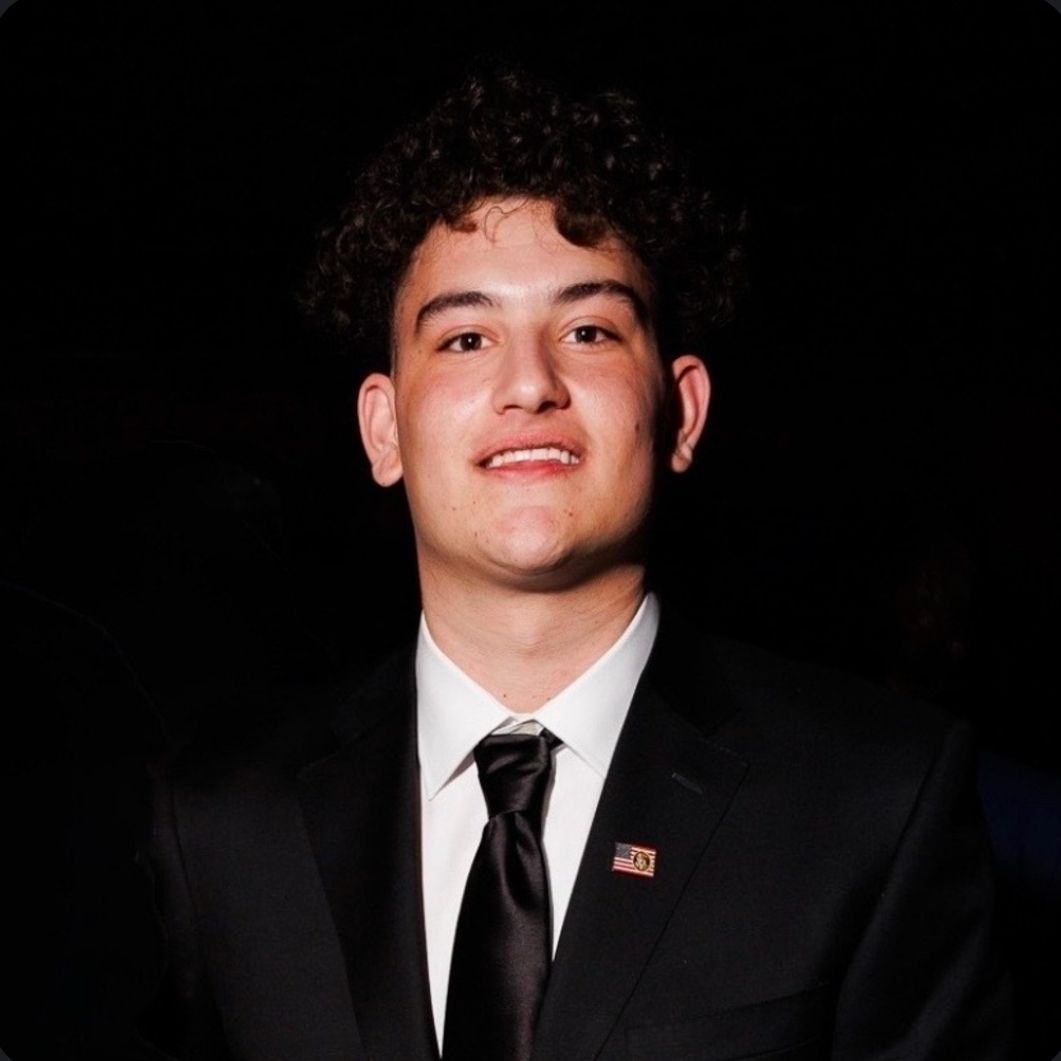
Founder
Shane Ginsberg
Founder & CEO of Street Poller Media
Shane Ginsberg is the founder and CEO of Street Poller Media, the largest street interview agency in the world. He invented the format at just 15 years old, filming on the sidewalks of Los Angeles, and has spent the last six years scaling it into a creative operation serving more than 500 brands across crypto, fintech, GLP-1, sports betting, food & beverage, fragrance, and consumer apps.
Today, Street Poller Media manages over $25M in monthly ad spend, has generated 5B+ lifetime views for client campaigns, and is recognized as the original and largest street polling network in the world. The company is based in Miami, Florida.


